In the past decade, business communication has undergone a silent but powerful transformation. What began as simple SMS exchanges has now evolved into real-time, conversational commerce, led prominently by Whatsapp. Today, a message on WhatsApp carries more urgency and credibility than an email or traditional SMS. Customers respond faster, businesses act quicker, and decisions are made in minutes rather than days. This shift is not accidental, it reflects a deeper behavioral change where people prefer instant, personal, and accessible communication over formal and delayed channels.
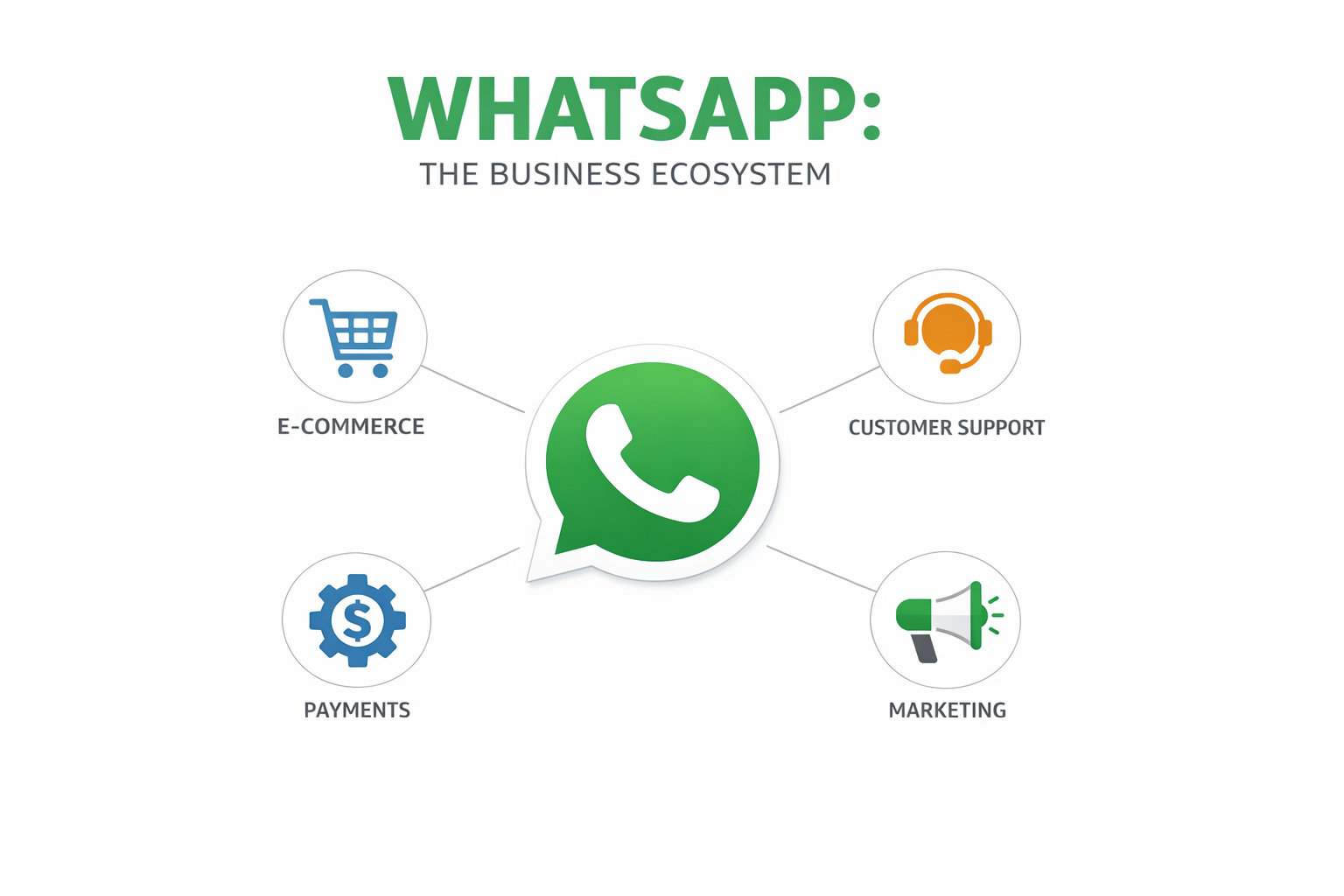
The strategic push by Meta platforms has played a crucial role in this evolution. With the introduction of WhatsApp Business, the platform has transformed into a full-fledged business ecosystem. Features like product catalogs, shopping carts, payment integrations, broadcast messaging, and automated replies have enabled even the smallest businesses to operate with enterprise-level efficiency. The addition of verified business accounts (blue tick) has further built trust, allowing customers to confidently engage with brands. Today, a local shop, a startup, or even a government office can run operations, communicate updates, and close transactions – all within a single chat interface.
One of the most powerful aspects of WhatsApp in business is its ability to create a direct, uninterrupted channel between businesses and customers. Unlike social media platforms where algorithms control visibility, WhatsApp ensures that messages are delivered directly into the user’s personal space. This has given rise to conversational commerce, where inquiries, negotiations, support, and payments happen seamlessly in a single thread. With advancements in AI-driven chatbots and automation, businesses can now handle thousands of customer interactions simultaneously, offering personalized responses, instant support, and guided purchasing experiences. This level of accessibility and responsiveness has redefined customer expectations across industries.
The adoption of WhatsApp is not limited to corporates; it has penetrated deeply into the unorganized sector, small businesses, and even government institutions. From local vendors sending daily product updates to large enterprises managing customer journeys, WhatsApp has become a universal business tool. Its simplicity, low cost, and widespread usage make it particularly impactful in markets like India, where mobile-first communication dominates. Features like broadcast lists, group engagement, and API-based integrations allow businesses to scale their communication while maintaining a personal touch.
Looking ahead, the businesses that will succeed are those that understand and leverage this evolving ecosystem. Mastering WhatsApp Business is no longer optional, it is essential. From setting up automated workflows and bots to integrating websites, CRM systems, and payment gateways, the opportunities are vast. Those who fail to adapt risk being left behind in an increasingly competitive and fast-moving market. The future of business is not just digital, it is conversational. And in that future, WhatsApp is not just a messaging app; it is a marketplace, a service desk, and a relationship engine, all rolled into one.